BFF5250 Corporate Treasury Management
Week 4: Investment Decision Making
under Risk: Real Options
Semester 1 2018
March 21 2018

2
Week 4 –Housekeeping
•Dr. Eden Zhang
–eden.zhang@monash.edu
–Consultation2time:23:002– 5:002PM2on2Wednesdays2during2teaching2weeks
–H2Building2Level23,2Call231259
• Week 3 review questions
•Pre-lecture quiz Week 4
•Group formation
–I2will2assign2ungrouped2students2at2the2end2of2the2week
–Decide2your2topic2for2Group2Presentation
–Topics2based2on2a2first–come–first-serve2basis
•Reminder
–Post-lecture2quiz2Week232due2on211:002PM2on2Sunday212April
–Pre-lecture2quiz2Week252due2on21:002PM2on2Wednesday2282March

3
Readings
Berk%&%de%Marzo%%Chapters%%%20%(Financial%Options)
Section%20.1- 20.2%and%20.4
Berk%&%de%Marzo Chapter%21%(Option%valuation)
Section%21.2
Berk%&%de%Marzo%%%Chapter%%%%22%(Real%Options)
Brigham,E.F &2Ehrhardt,2M.C.,2(2012)2Financial2Management2- Theory2&2Practice,2
Thompson2South2Westem,2pp2973-982
Lecture%slides,%

4
Learning Objectives
• What2are2the2shortcomings2of2traditional2NPV2analysis2
in2assessing2the2value2of2flexibility2and2management2
strategy?
• What2are2real2options2and2what2are2the2different2types2
of2real2options2available2to2firms?
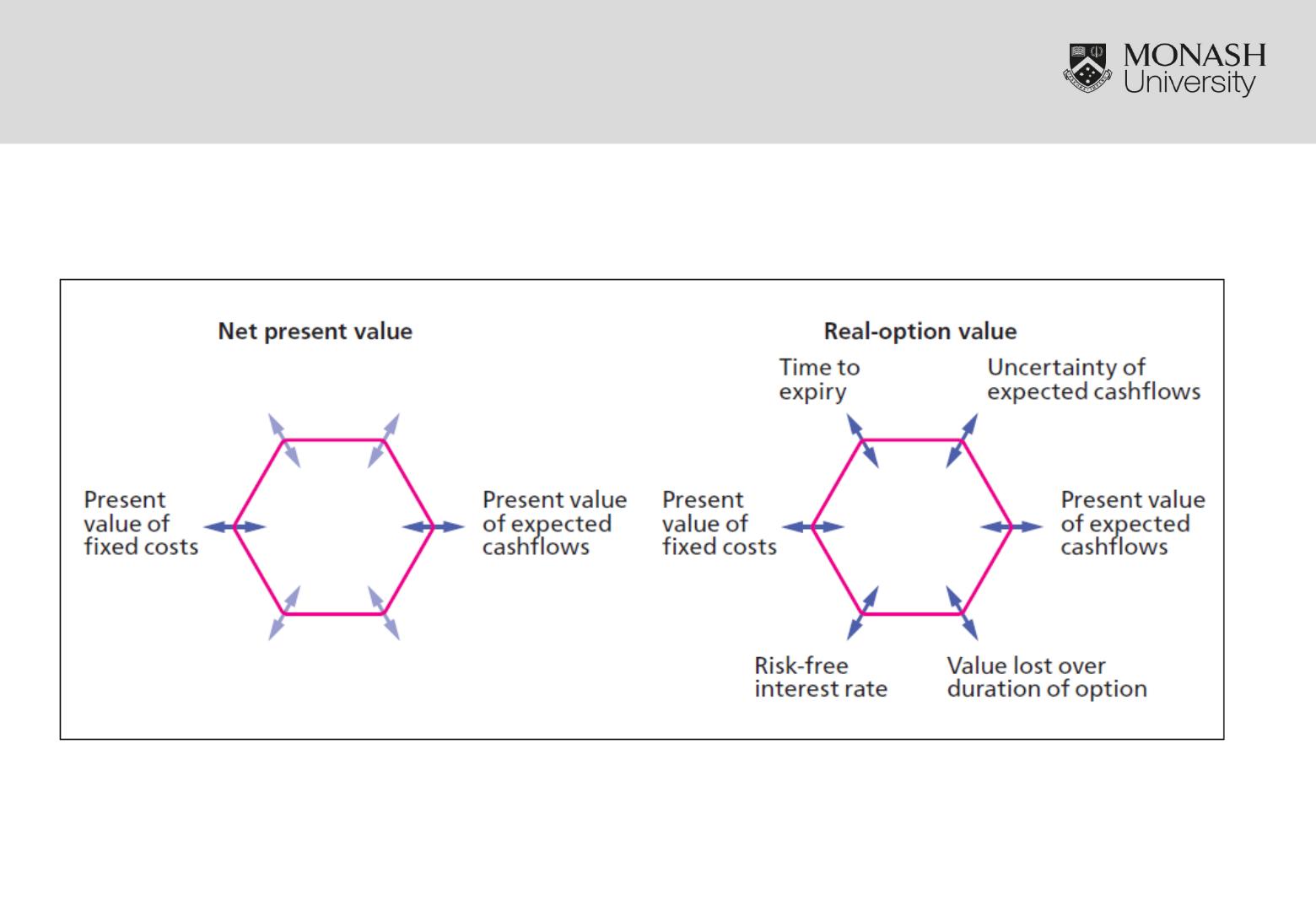
• What2factors2contribute2to2the2value2of2real2options?
• Does2the2market2believe2and2behave2as2though2real2
options2really2exist2?
• Using2a2decision2tree2approach,2how2can2we2value2real2
options?
• Using2the2Black2&2Scholes2pricing2model,2how2can2we2
value2real2options?
By2the2end2of2
this2lecture,2
students2
should2be2
able2to:

Shortcomings2of2NPV2analysis
6
NPV Analysis
Base2Line2
Cash2flows
Discount2
factor2
(WACC)
Net2Present2
Value2(NPV)

7
NPV vs Managerial flexibility
• Traditional discounted cash flow approaches (such as the
NPV rule)
• cannot properly capture management’s flexibility to adapt and revise later
decisions in response to unexpected market developments.
• assume an expected scenario of cash flows and presume management’s
passive commitment to a certain static operating strategy.
• The real world is characterized by change, uncertainty and competitive interactions
=>
–As2new2information2arrives2and2uncertainty2about2market2conditions2is2resolved,2
management2may2have2valuable2flexibility2to2alter2its2initial2operating2strategy2in2order2
to2capitalize2on2favorable2future2opportunities2or2to2react2so2as2to2mitigate2losses.22
–This2managerial2operating2flexibility2is2like2financial2options,2and2is2known2as2Strategic2
Options,2or2Real2Options.
8
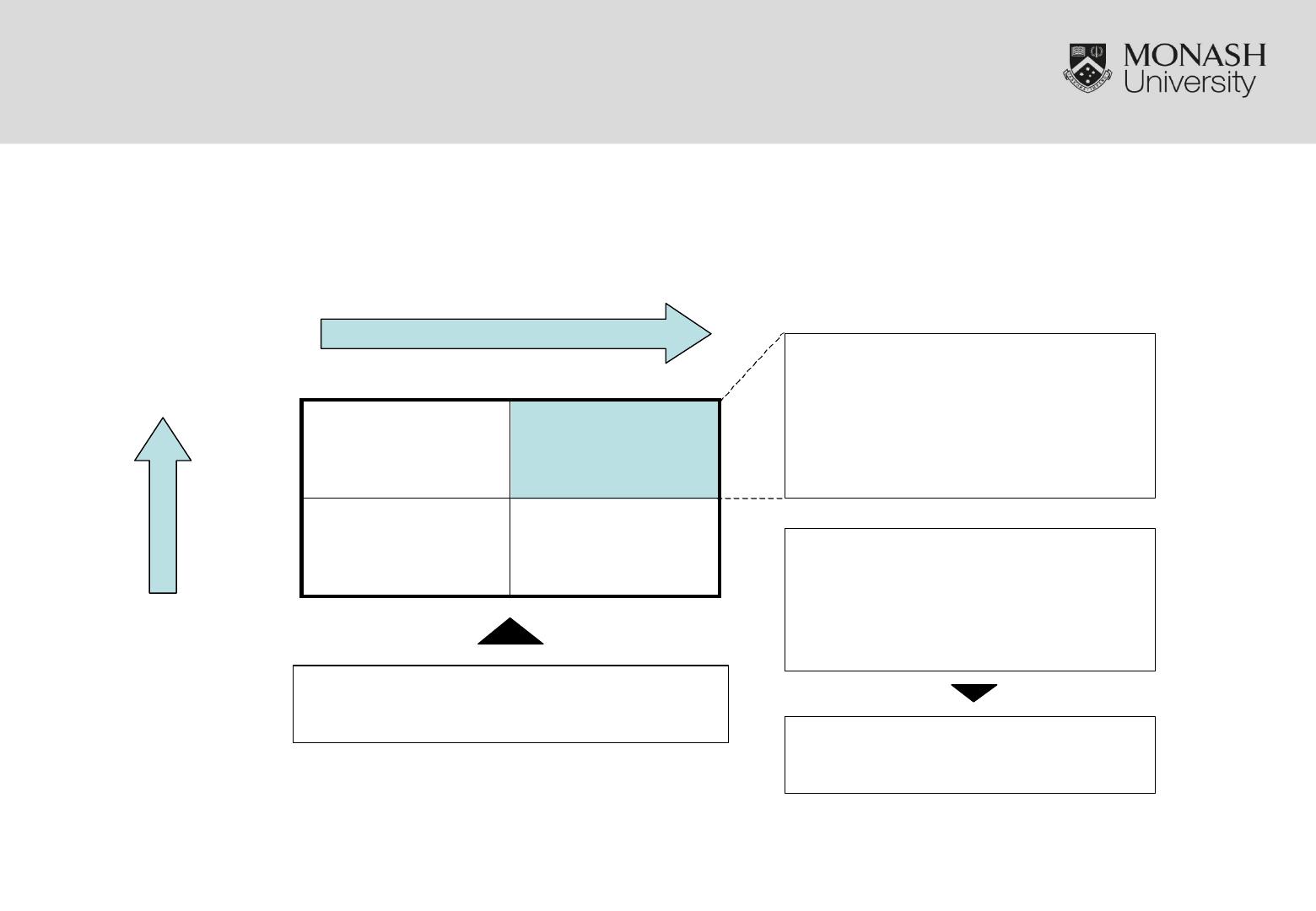
–There2are222dimensions2that2are2important,2uncertainty2and2flexibility2in2
how2we2respond2to2changing2circumstances
Moderate
Flexibility Value
Low
Flexibility Value
High
Flexibility Value
Moderate
Flexibility Value
Moderate
Flexibility Value
Low
Flexibility Value
High
Flexibility Value
Moderate
Flexibility Value
In every scenario, flexibility value is greatest
when the project’s value without flexibility is
close to break-even
Room for
Managerial Flexibility
Ability to respond
High
Low
Uncertainty
Low High
Likelihood of receiving new information 1. High room for managerial flexibility
• Allows management to respond
appropriately to this new
information
2. High uncertainty about the future
• Very likely to receive new
information over time
3. NPV without flexibility near zero
• If a project is neither obviously
good nor obviously bad,
flexibility to change course is
more likely to be used and
therefore is more valuable.
+
Under these conditions, the difference
between ROA and other decision tools
is substantial
Flexibility Value Greatest When:
Exhibit 1.6 When managerial flexibility is valuable.
Source: T. Copeland, T. Koller, and J. Murrin, Valuation: Measuring and Managing the Value of Companies, 3rd edition, New York: John Wiley & Sons, 2002.
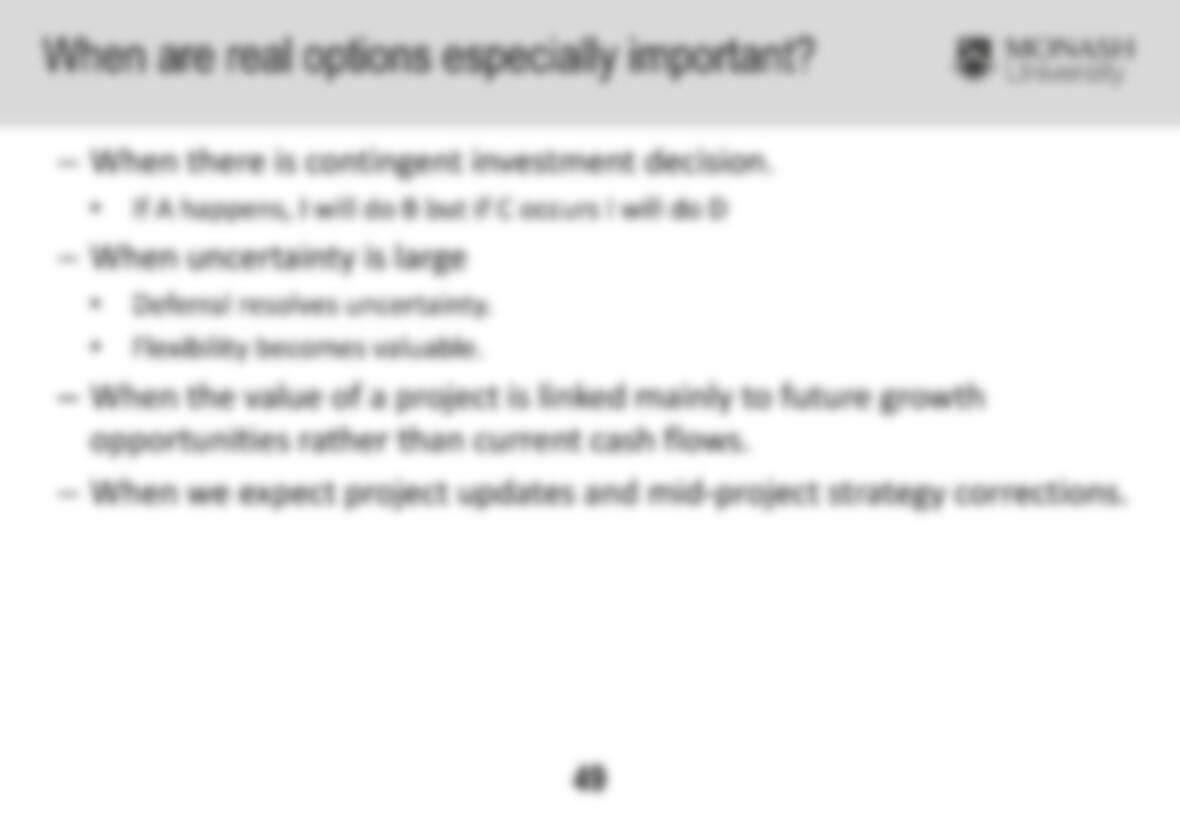
When are real options especially important?
9
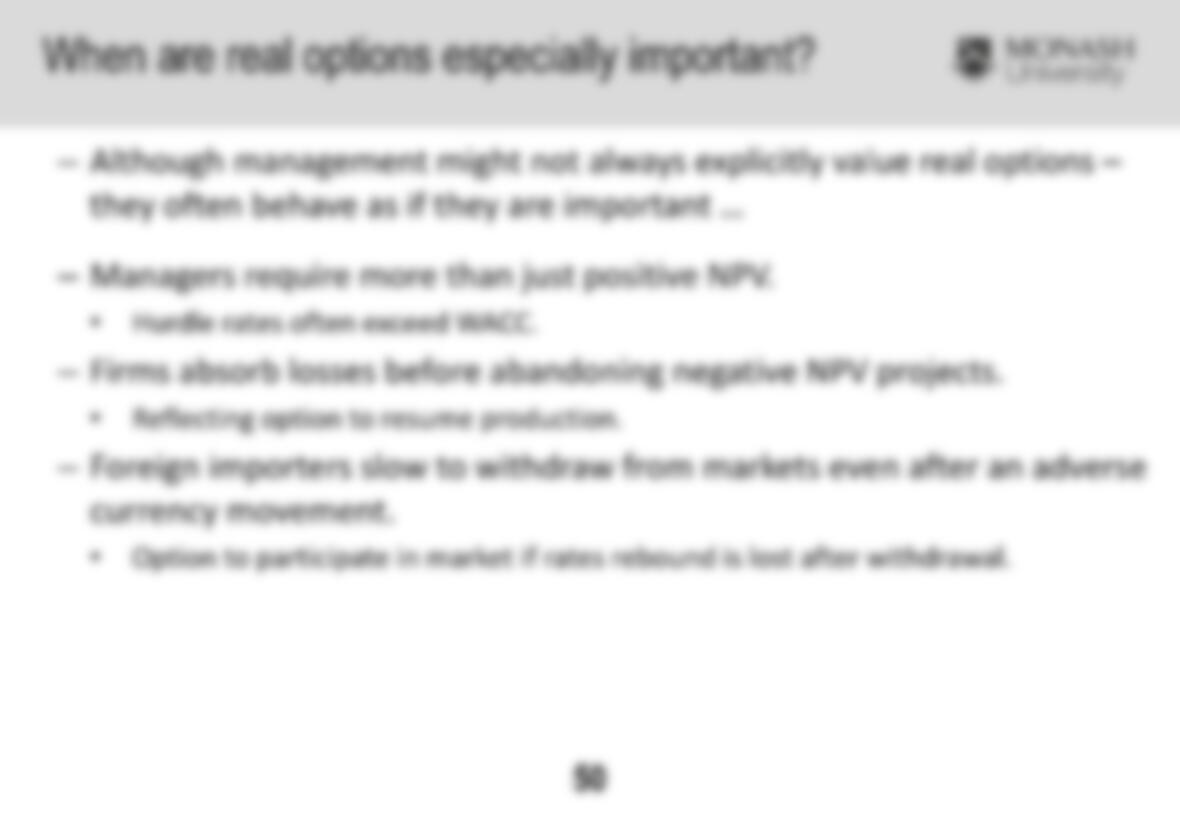
When are real options especially important?

What are real options?
But first a primer on options
11
The$concept$of$“optionality”$is$a$valuable$way$to$look$at$many$business$activities$&$
alternatives.
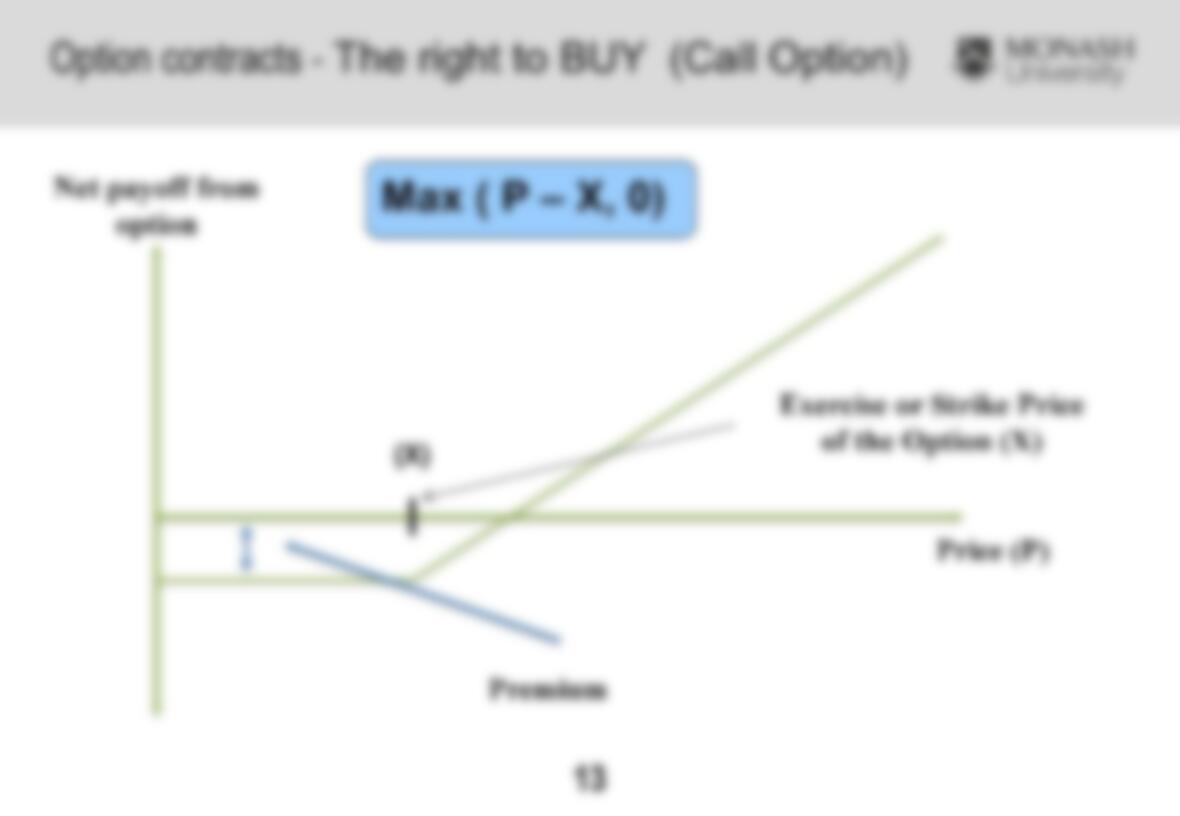
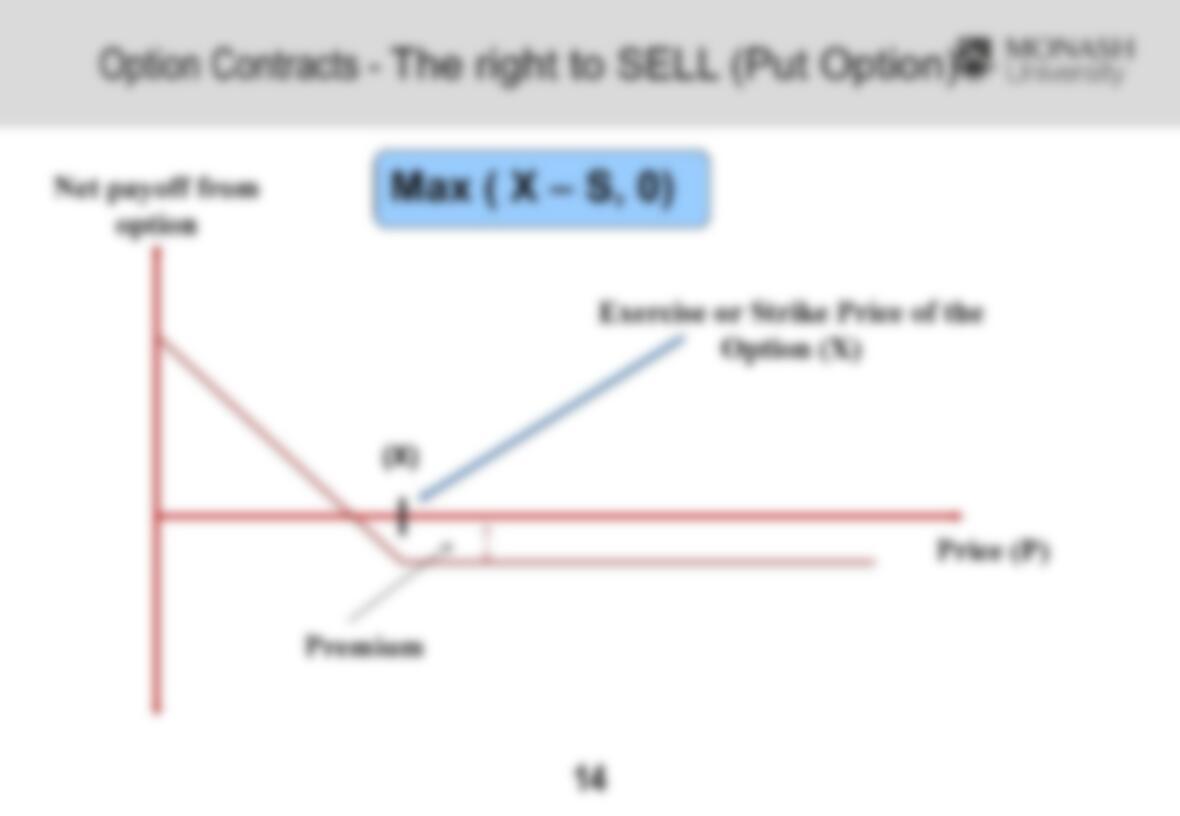
An$option$is$a$contract$which$gives$the$buyer$(the$owner)$the$right,$
but$not$the$obligation,$to$buy$or$sell$an$underlying asset at$a$
specified$strike$(exercise)$price on$or$before$a$specified$date.$
The$seller$has$the$corresponding$obligation$to$fulfill$the$transaction$–that$is$to$sell$
or$buy$–if$the$buyer$(owner)$”exercises”$the$option.
Options
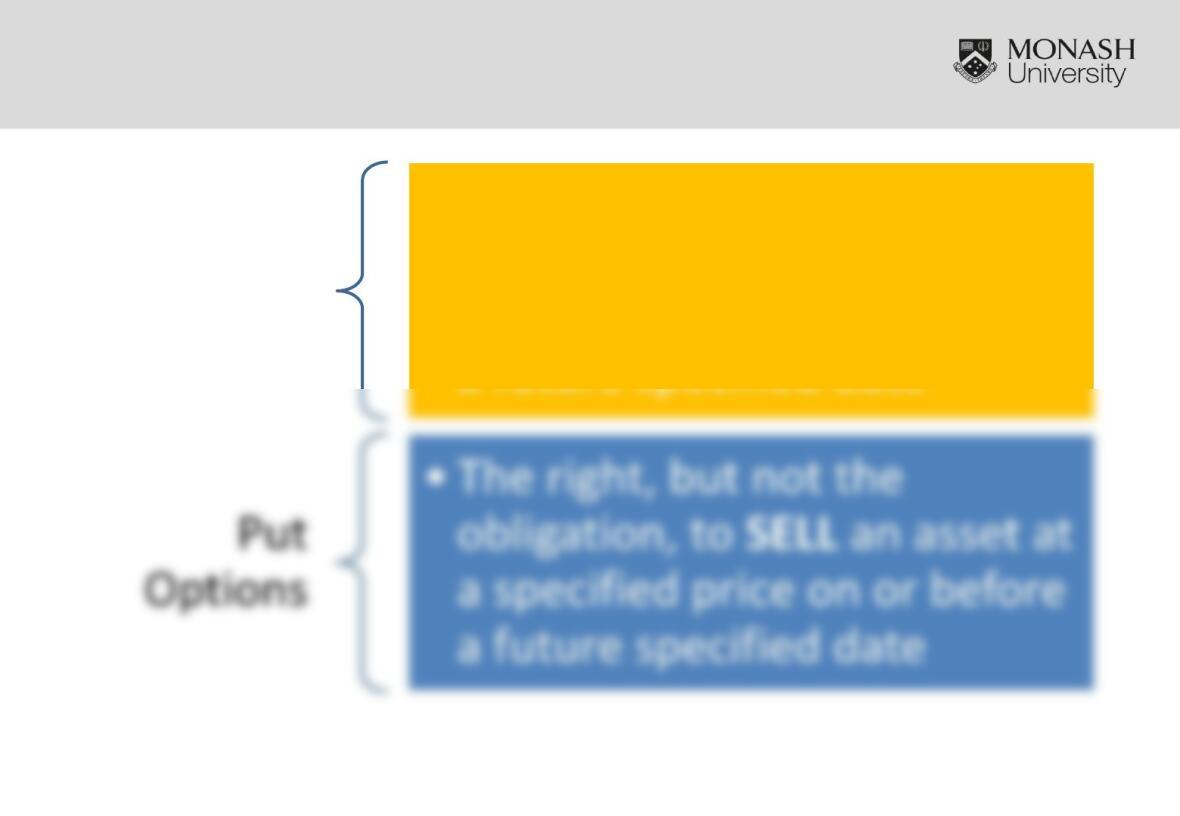
Call2
Options
• The2right,2but2not2the2
obligation,2to2BUY an2asset2at2
a2specified2price2on2or2before2
Call options vs put options
14/3/18