(Chapter 6 of OM6, Collier + Evans)
Deakin University CRICOS Provider Code: 00113B
1
MMM267: Business
Logistics –Week 3
COLLIER/EVANS
OM 6Operations + Supply Chain Management
6 Supply Chain Design
Copyright ©2017 Cengage Learning. All Rights Reserved. May not be scanned, copied or duplicated, or posted to a publicly accessible website, in whole or in part.

LEARNING OUTCOMES
1. Explain the concept of a global supply chain and describe the key design decisions
2. Describe the key trade-offs that managers must consider in designing supply chains
3. Understand how to evaluate outsourcing and offshoring decisions and consider
relevant business examples
4. Explain the types of decisions required and criteria used to locate facilities in supply
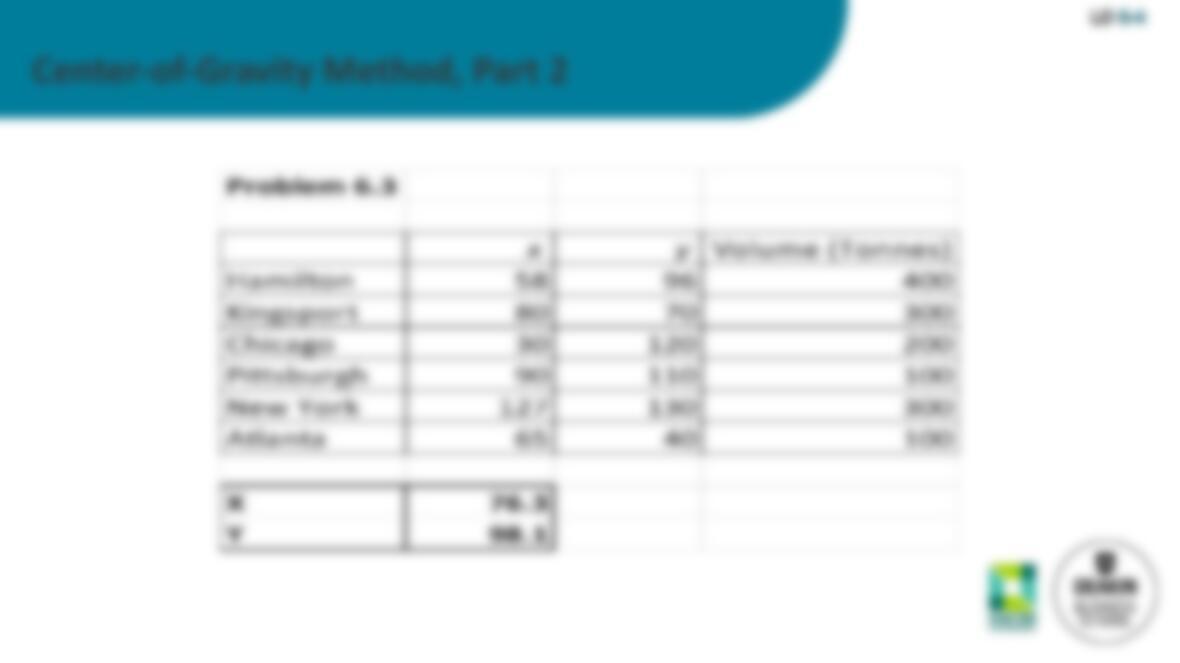
chains, and understand & apply the center–of-gravity method to determine optimal
location point
5. Understand supply chain optimization and the role of technical tools like the
transportation model in optimizing costs in supply chains (math relating to the
transportation model is not within the scope of the MMM267 unit)

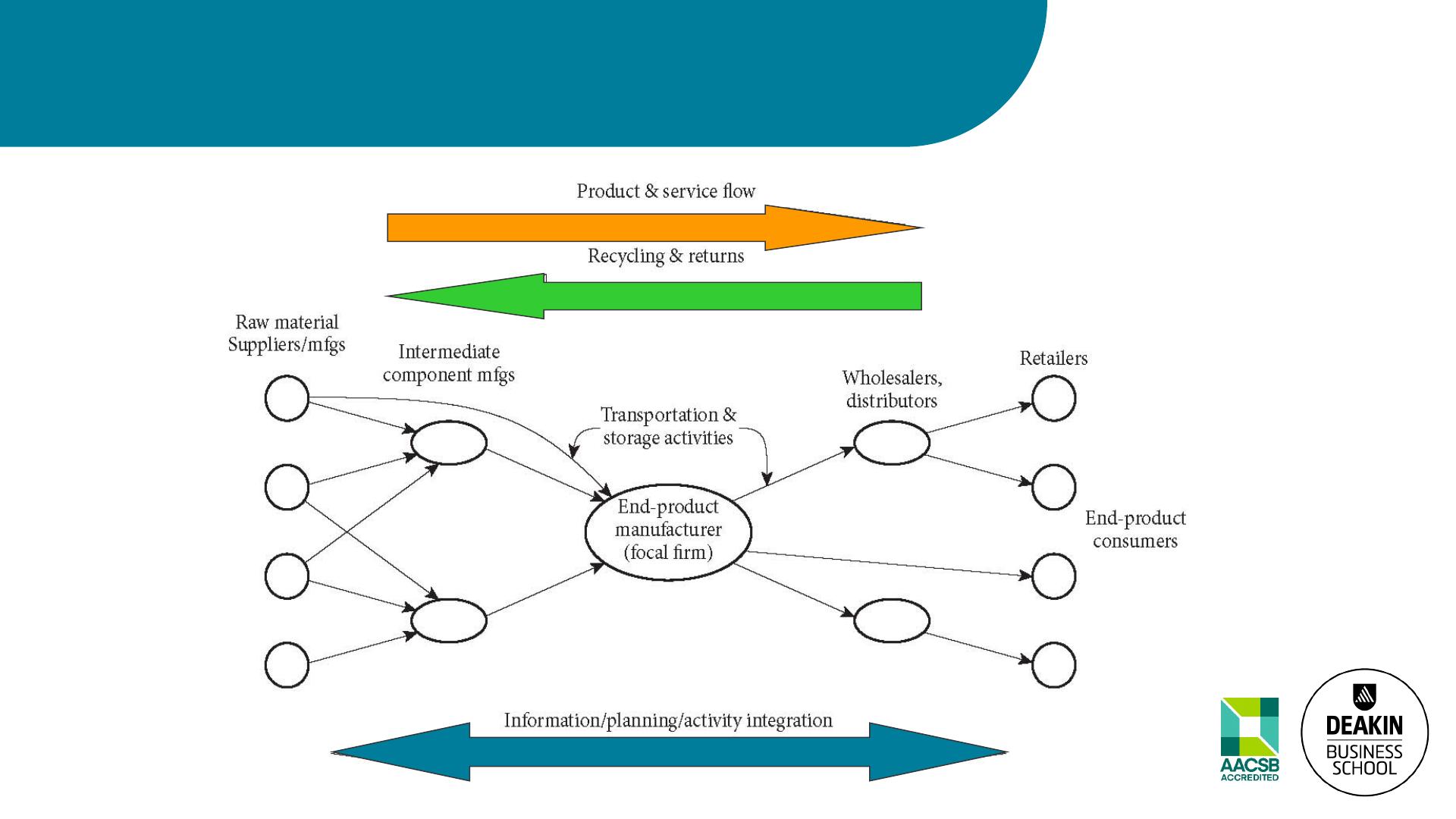
Supply Chain
Key subsystem of avalue chain that focuses on physical
storage &movement of goods and materials
•Supports information through the supply, production, and distribution
processes
LO 6-1

Multinational Enterprise
Sources, markets, and produces goods and services in
several countries as part of a global supply chain
Helps:
•Minimize costs
•Maximize profits, customer satisfaction and social welfare
LO 6-1
©2015 Cengage Learning. All Rights Reserved. May not be scanned, copied or duplicated, or posted to a publicly accessible website, in whole or in part.
Supply Chain Visualized as a Network
LO 6-1

Typical Supply Chain Design Decisions
Exhibit 6.1
LO 6-1
EXHIBIT 6.1 Supply Chain Design Decisions
1. Strategy. What is our supply chain strategy to meet the slower growth of industrialized countries and
more rapid growth of emerging economies while considering cultural differences?
2. Control. Do we centralize or decentralize control of the supply chain?
3. Location. Where do we locate facilities such as research and development offices, call centers, and
warehouse and distribution centers in the supply chain to provide efficiencies and improve customer
value?
4. Sustainability. How do we champion economic, environmental, and social sustainability goals and
practices in global supply chains?