IMF Country Report No. 19/252
REPUBLIC OF LITHUANIA
2019 ARTICLE IV CONSULTATION—PRESS RELEASE;
STAFF REPORT
Under Article IV of the IMF’s Articles of Agreement, the IMF holds bilateral discussions
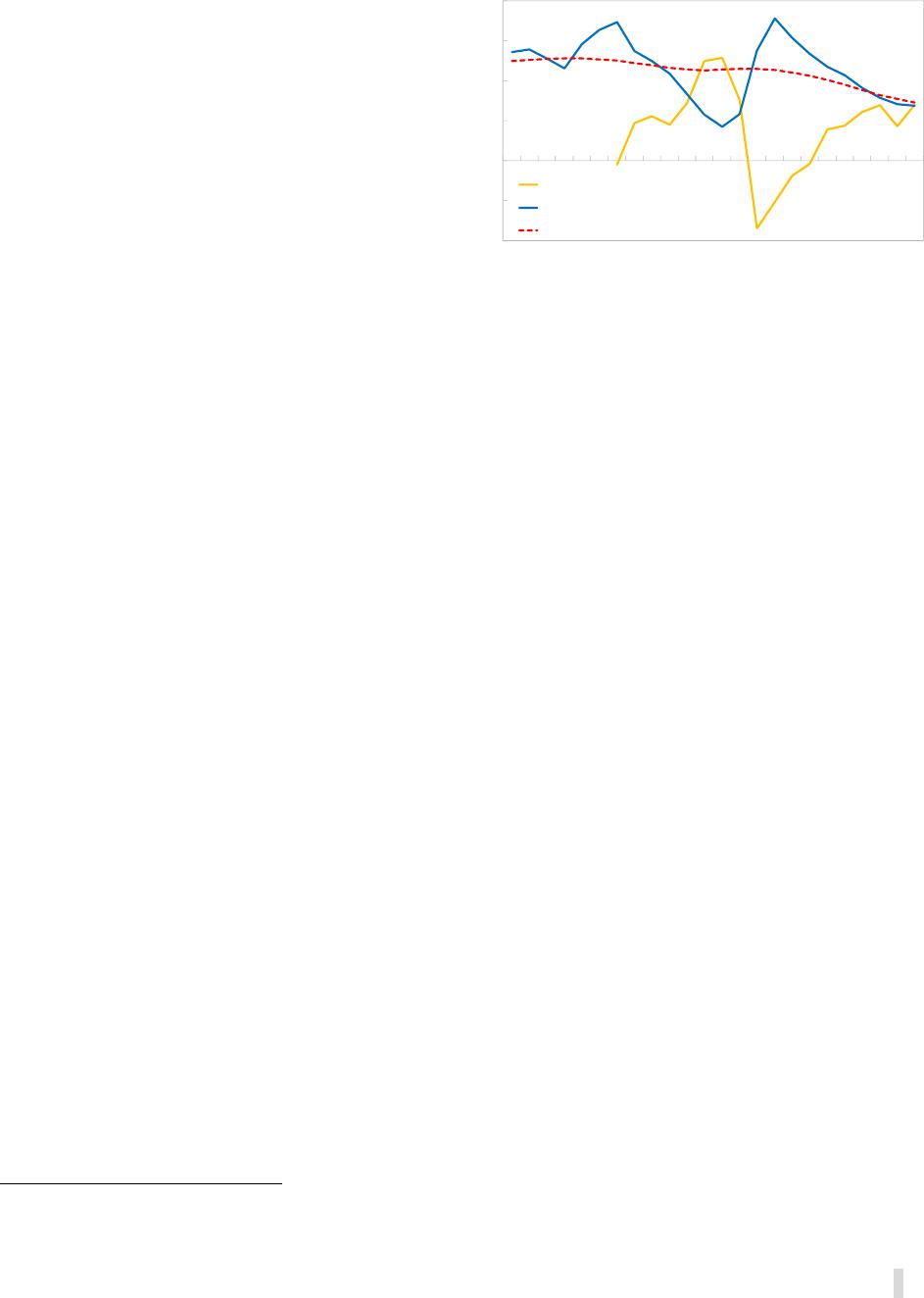
with members, usually every year. In the context of the 2019 Article IV consultation with
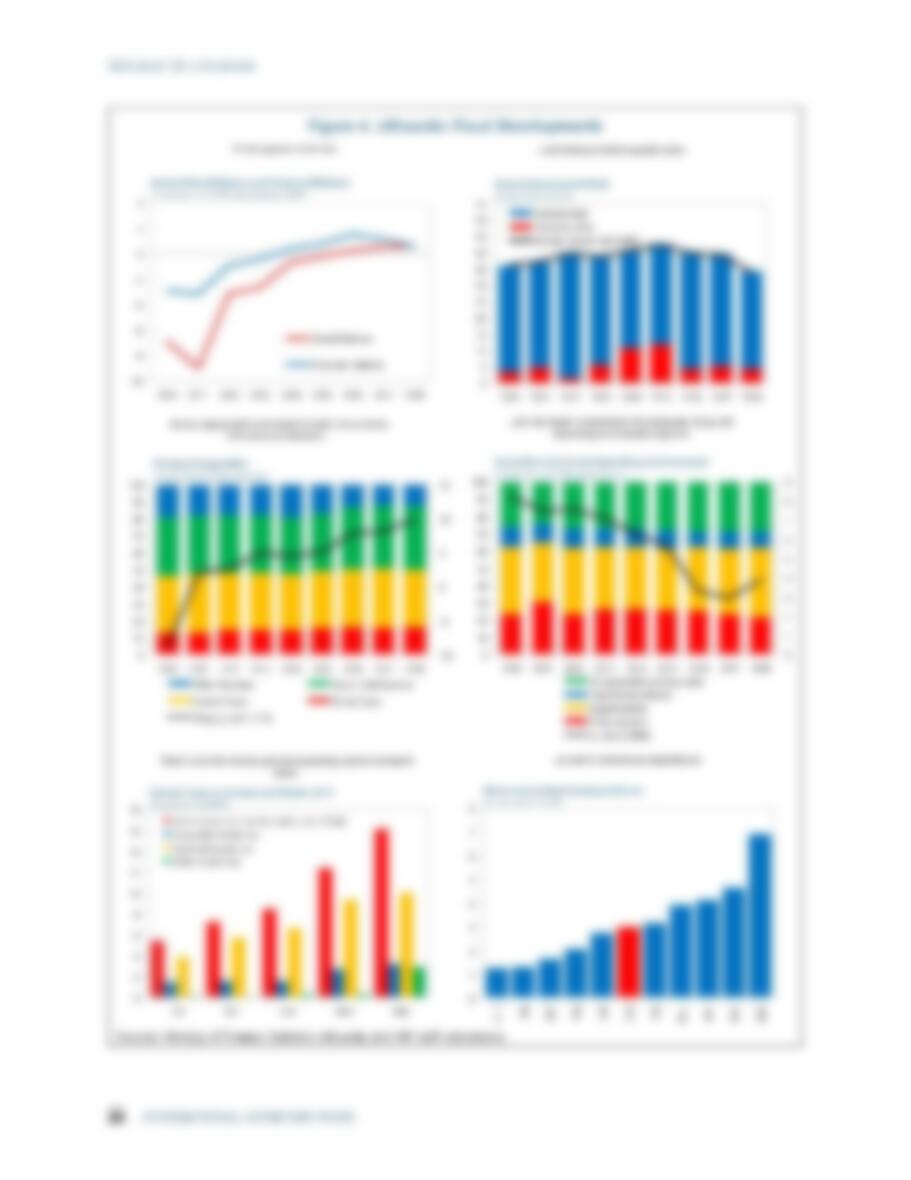
Republic of Lithuania, the following documents have been released and are included in
this package:
•A Press Release.
•The Staff Report prepared by a staff team of the IMF for the Executive Board’s
consideration on lapse-of–time basis following discussions that ended on
June 25, 2019, with the officials of the Republic of Lithuania on economic
developments and policies. Based on information available at the time of these
discussions, the staff report was completed on July 12, 2019.
•An Informational Annex prepared by the IMF staff.
The document listed below have been or will be separately released.
Selected Issues
The IMF’s transparency policy allows for the deletion of market-sensitive information and
premature disclosure of the authorities’ policy intentions in published staff reports and
other documents.
Copies of this report are available to the public from
International Monetary Fund • Publication Services
PO Box 92780 • Washington, D.C. 20090
Telephone: (202) 623-7430 • Fax: (202) 623-7201
E-mail: publications@imf.org Web: http://www.imf.org
Price: $18.00 per printed copy
International Monetary Fund
Washington, D.C.
© 2019 International Monetary Fund
July 2019

REPUBLIC OF LITHUANIA
Press Release No. 19/308
FOR IMMEDIATE RELEASE
July 31, 2019
IMF Executive Board Concludes Article IV Consultation with the Republic of Lithuania
On July 30, 2019, the Executive Board of the International Monetary Fund (IMF) concluded the
Article IV consultation1 with the Republic of Lithuania and considered and endorsed the staff
appraisal without a meeting.
The economy exceeded expectations in 2018. Real GDP expanded by 3.5 percent with external
demand more resilient than expected and without pre-crisis imbalances reemerging. A strong
contribution in net exports helped the current account reach its highest surplus in four years.
Private consumption growth accelerated with better-than-expected employment growth and a
rebound in real wage growth. The labor market remains tight with labor costs among the fastest
growing in the EU, but without inflationary pressures. With a positive macroeconomic
environment, the government has achieved a higher fiscal surplus for the third year in a row.
Data for the first quarter of 2019 suggest that the economy’s growth momentum has carried over
into this year.
With Lithuania’s economy expanding above potential, growth is expected to moderate in the
next few years to a more sustainable pace. Growth in 2019 is projected at 3.2 percent, mainly
because a moderating labor market will slow down consumption and exports will decelerate after
a strong start early this year. Investment will depend on policy predictability, reform efforts and
the business environment.
As a small open economy, Lithuania is vulnerable to a weakening external environment
characterized by slower growth in Europe, continued trade tensions, uncertainty around Brexit
conditions, and geopolitical risks. Domestically, emigration, population aging, and slow progress
in implementing key aspects of the government’s reform agenda are the main risks to the
economic outlook.
1 Under Article IV of the IMF‘s Articles of Agreement, the IMF holds bilateral discussions with members, usually
every year. A staff team visits the country, collects economic and financial information, and discusses with officials
the country’s economic developments and policies. On return to headquarters, the staff prepares a report, which
forms the basis for discussion by the Executive Board.
International Monetary Fund
700 19th Street, NW
Washington, D. C. 20431 USA

Executive Board Assessment
2
In concluding the Article IV consultation with the Republic of Lithuania, Executive Directors
endorsed the staff’s appraisal as follows:
The Lithuanian economy has continued to enjoy a strong macroeconomic and fiscal
performance, but long-term challenges remain largely unaddressed. Prudent fiscal policy, a
flexible labor market, and proactive macroprudential policies have been critical to preserve
stability and should be maintained. The recovery has avoided the emergence of the large
imbalances of the past and better positioned Lithuania to face external shocks and future
economic downturns. However, Lithuania still confronts severe demographic pressures, large
social disparities, and external uncertainty that can only be addressed with structural reforms.
This is the only way to ensure sustained high wage growth and improved living standards.
The continued strong economic performance suggests that a neutral fiscal stance would
have been preferable this year. Going forward there are heightened risks to revenues and
increased spending pressures from social needs that are partly countered by conservative
economic projections. Gains from combating informality are difficult to predict while the
revenue impact of recent reforms is uncertain. Thus, revenue buoyancy may largely reflect
cyclical factors. Without commensurate increases in revenues, spending pressures are increasing
budget rigidities.
Macroprudential policy is being used proactively to prevent systemic risks. Signs that
moderate cyclical systemic risks are emerging led the Bank of Lithuania to raise the
countercyclical buffer to one percent in mid-2018. The financial system remains sound, liquid,
and profitable.
The external position is stronger than implied by fundamentals and desirable policies.
However, under unchanged policies, Lithuania’s current account should gradually converge
towards its medium-term norm.
Despite growing urgency, education and healthcare reforms have failed to deliver.
Maintaining large and inefficient networks comes at the cost of quality and opportunities. Only
comprehensive reform will allow Lithuania to produce the competitive and well-paid workforce
needed to tackle income and social disparities. Thus, planned wage increases in these sectors
should be made conditional on progress in network optimization.
Pension and tax reforms go in the right direction, but remaining challenges will require
future compromises. Tax reform could have been more ambitious in shifting taxes away from
labor. The reduction of tax exemptions and privileged regimes is also needed. On pensions,
reform has ensured the financial, but not social, sustainability of the system. Low and declining
2
The Executive Board takes decisions under its lapse-of-time procedure when the Board agrees that a proposal can
be considered without convening formal discussions.
REPUBLIC OF LITHUANIA
pensions will increase pressures to boost basic pensions, which have been transferred to the
budget this year. This represents a fiscal risk over the medium-term.
ALMP should be strengthened to effectively address skill mismatches and increase labor
force participation. Current funding is low and relies excessively on EU funds and its
composition inadequately reflects cyclical conditions or the needs of the labor market. Thus,
reliance on employment subsidies should decrease and focus on the most disadvantaged groups
only. The emphasis should shift to well-designed training curricula to upskill the labor force.
Lithuania faces a difficult tradeoff between maintaining a low and competitive tax system
and strengthening the social safety net. With discretionary spending already low, further
increases in social spending will likely require higher revenues. To ensure the most efficient use
of limited resources, targeted social spending should be the main tool used. In this connection,
the design and generosity of child benefits should balance their positive impact on reducing child
poverty against the potential disincentives to work, particularly for women.
Fintech provides big opportunities to improve financial services and produce high-skill
jobs, but it also brings challenges, particularly related to anti-money laundering. The
authorities’ efforts to promote fintech are already delivering results. Fintech companies will
introduce some healthy competition, initially in the payment services segment. The larger focus
on cross-border transactions represents a shift in the business model of the financial system that
will bring new challenges for supervision, particularly regarding AML/CFT. The authorities’
efforts to implement the 2018 MONEYVAL recommendations and enhance inter-agency
coordination should be complemented by adequate resources across all agencies involved.

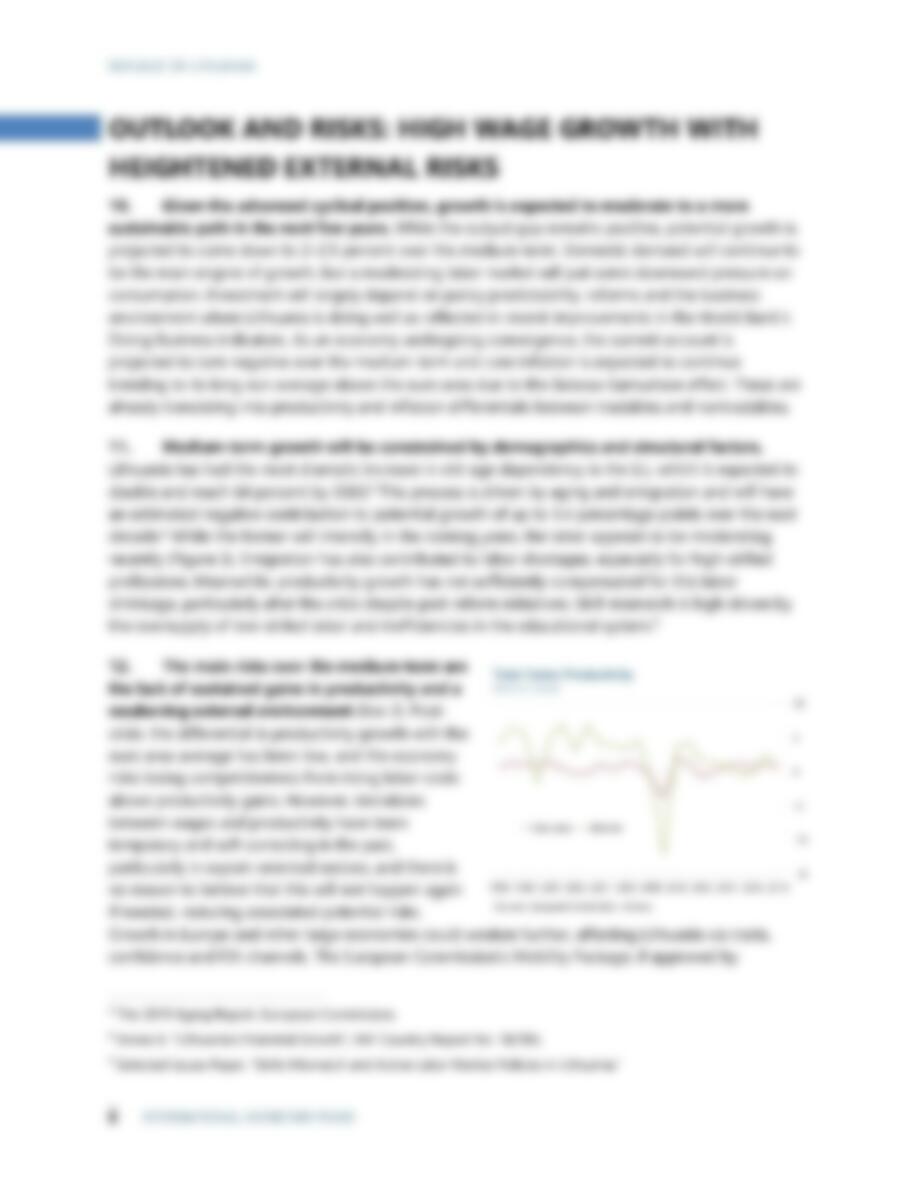
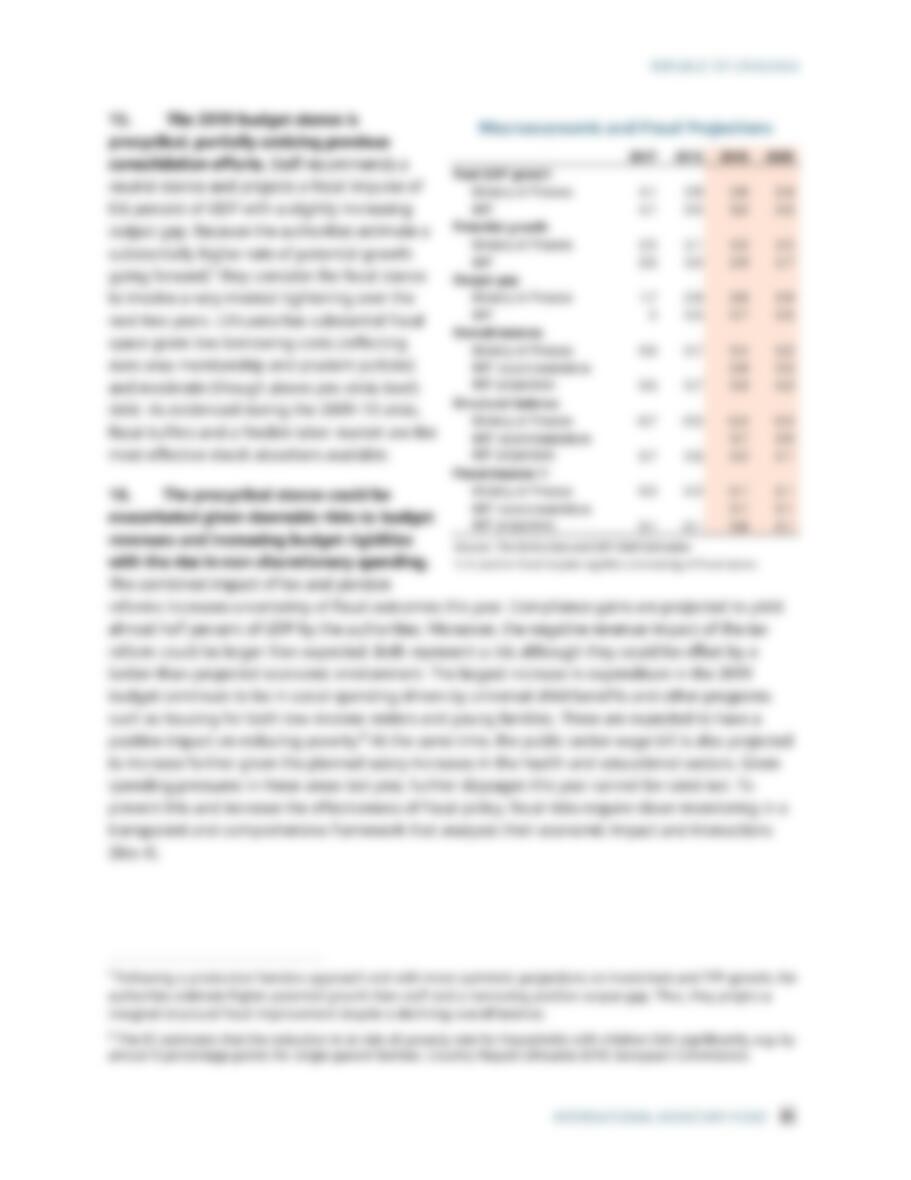
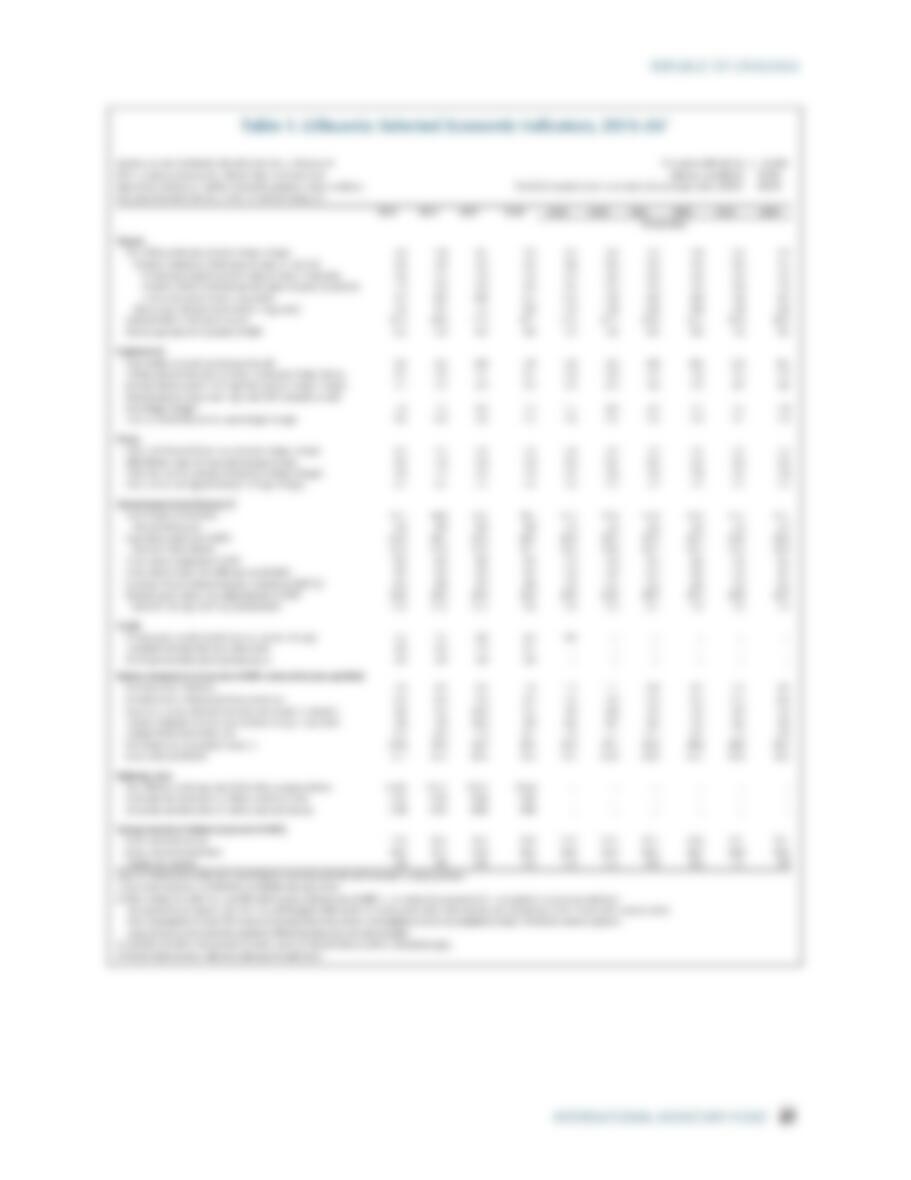
Republic of Lithuania: Selected Economic Indicators, 2018–241
Quota (current, % of total): SDR 441.6 million, 0.09 percent
Per capita GDP (2018): € 16,100
Main products and exports: refined fuel, machinery and equipment,
chemicals, textiles, foodstuffs, plastics, wood products.
Literacy rate (2015): 99.8 %
At-risk-of-poverty (after transfers), share of population (2017): 29.6%
Key export markets: Russia, Latvia, Estonia, Poland, Germany
2018
2019
2020
2021
2022
2023
2024
Projections
Output
Real GDP growth (annual percentage change)
3.5
3.2
2.6
2.5
2.4
2.3
2.3
Domestic demand growth (year-on-year, in percent)
2.9
3.8
3.5
3.3
3.1
3.1
3.1
Private consumption growth (year-on-year, in percent)
3.9
3.7
3.2
3.2
3.1
3.1
3.0
Domestic fixed investment growth (year-on-year, in percent)
6.5
6.0
5.5
4.3
3.9
3.6
3.6
Inventories (contribution to growth)
-1.1
-0.1
0.0
0.0
0.0
0.0
0.0
Net external demand (contribution to growth)
0.6
-0.5
-0.9
-0.9
-0.8
-0.9
-0.9
Nominal GDP (in billions of euro)
45.1
47.7
50.2
52.6
55.1
57.6
60.2
Output gap (percent of potential GDP)
0.5
0.7
0.6
0.4
0.2
0.1
0.0
Employment
Employment (annual percentage change)
1.5
0.6
0.2
0.0
-0.1
-0.1
-0.1
Unemployment rate (year average, in percent of labor force)
6.1
5.9
5.8
5.7
5.6
5.5
5.5
Average monthly gross earnings (annual percentage change)
9.9
8.0
6.5
5.4
4.9
4.7
4.6
Average monthly gross earnings, real (CPI-deflated, annual
percentage change)
7.2
5.5
4.3
3.2
2.7
2.5
2.4
Labor productivity (annual percentage change)
2.0
2.6
2.4
2.4
2.4
2.4
2.4
Prices
HICP, end of period (year-on-year percentage change)
1.8
2.4
2.2
2.2
2.2
2.2
2.2
GDP deflator (year-on-year percentage change)
3.3
2.5
2.5
2.3
2.3
2.2
2.2
HICP core, period average (annual percentage change)
1.9
2.1
2.4
2.4
2.4
2.4
2.4
HICP, period average (annual percentage change)
2.5
2.3
2.2
2.2
2.2
2.2
2.2
General government finances 2/
Revenue (percent of GDP)
34.7
35.7
35.8
35.8
35.8
35.7
35.7
Of which EU grants
0.8
1.3
1.2
1.2
1.1
1.1
1.0
Expenditure (percent of GDP)
34.0
35.4
35.5
35.7
35.7
35.6
35.6
Of which: Non-interest
33.1
34.5
34.8
35.2
35.3
35.3
35.3
Fiscal balance (percent of GDP)
0.7
0.3
0.2
0.1
0.1
0.1
0.1
Fiscal balance excl. one-offs (percent of GDP)
0.7
0.3
0.2
0.1
0.1
0.1
0.1
Structural fiscal balance (percent of potential GDP) 3/
0.8
0.2
0.1
0.1
0.1
0.1
0.1
General government gross debt (percent of GDP)
34.2
32.0
30.2
28.7
27.3
26.0
24.7
Of which: Foreign currency-denominated
9.6
9.0
8.5
8.1
7.7
7.3
7.0
Credit
Private sector credit (end of period, percent change)
6.0
4.1
…
…
…
…
…
Long-term lending rate to private sector
8.1
…
…
…
…
…
…
Short-term lending rate to private sector
2.6
…
…
…
…
…
…
Balance of payments (in percent of GDP, unless otherwise specified)
Current account balance
1.6
1.2
1.1
0.6
0.1
-0.4
-0.8
Current account balance (billions of euros
0.7
0.6
0.6
0.3
0.1
-0.2
-0.5
Exports of goods and services (volume change, in percent)
5.1
4.0
3.8
3.7
3.7
3.7
3.7
Imports of goods and services (volume change, in percent)
4.3
4.5
4.7
4.6
4.5
4.5
4.5
Foreign direct investment, net
-0.1
0.0
0.1
0.1
0.2
0.3
0.4
Short-term debt at original maturity
36.7
34.5
33.1
32.2
30.8
29.8
29.0
Gross external debt 4/
78.5
73.2
69.6
66.8
63.7
61.0
58.5
Exchange rates
Real effective exchange rate (2005=100, +=appreciation)
126.4
..
..
..
..
..
..
Exchange rate (euro per U.S. dollar, end of period)
0.88
..
..
..
..
..
..
Exchange rate (euro per U.S. dollar, period average)
0.85
..
..
..
..
..
..
Saving-investment balance (in percent of GDP)
Gross national saving
19.8
20.0
20.4
20.1
19.8
19.4
19.1
Gross national investment
18.2
18.8
19.3
19.5
19.7
19.8
19.9
Foreign net savings
-1.6
-1.2
-1.1
-0.6
-0.1
0.4
0.8
Sources: Lithuanian authorities; World Bank; Eurostat; and IMF staff estimates and projections.
1/ Data are presented on ESA2010, and BPM6 manuals basis.
2/ The numbers for 2014 include 302 million euros (0.8 percent of GDP) in compensation payments for past pension cuts on accrued basis. The
payments are spread over 2014–16, affecting the debt profile for these years. ESM contributions are spread over 2015–19, and also increase
debt. Passive projections from 2016 onward; incorporate only announced budgetary measures; budgetary impact of further defense spending,
wage compensation and their potential offsetting measures are not included.
3/ Calculation takes into account standard cyclical adjustments as well as absorption gap.
4/ Government external debt excludes guaranteed loans.
REPUBLIC OF LITHUANIA
STAFF REPORT FOR THE 2019 ARTICLE IV CONSULTATION
KEY ISSUES
Context. Lithuania needs sustained productivity gains to ensure higher living standards
and convergence with Western Europe. This is the only way to address, or even reverse,
negative demographic dynamics. Macroeconomic and financial stability is a pre-
requisite for sustained growth and has been achieved through prudent policies and
labor market flexibility. Nevertheless, significant and well-identified structural
challenges have yet to be addressed with ambitiously designed and decisively
implemented productivity-enhancing reforms. The current expansionary cyclical
environment as well as strong fiscal and external positions provide an ideal opportunity
to address these challenges.
Key Policy Recommendations:
•Preserve macroeconomic and financial stability: Maintain a neutral fiscal stance
and proactive macroprudential and supervisory policies. This will help avoid the
recurrent boom-bust cycle characteristic of Lithuania.
•Raise productivity growth: This will support sustained high wage growth going
forward and drive convergence with the standard of living of Western Europe
without harming competitiveness. Reform efforts should focus on:
➢Education and healthcare: Reform proposals correctly identified the key
issues, but initial implementation has failed to deliver in key areas.
➢Pension and tax policy: Reforms go in the right direction. Their impact should
be regularly addressed, and adjustments made as required. Tax policy reform
could be more ambitious by further reducing labor taxes and generating a
broader, more efficient revenue base, including through environmental taxes.
➢Labor market: Improve the composition of active labor market policies to
upskill the labor force, reduce skill mismatches and increase participation.
•Social disparities and poverty: Strengthening the provision of public services may
require increasing revenues. The design of social spending should avoid impeding
work incentives and, given limited resources, better target disadvantaged groups.
•The development of a dynamic fintech industry should continue to be
supported: With opportunities come risks that should be addressed by enhancing
supervisory capacity and strengthening AML/CFT safeguards.
July 12, 2019

REPUBLIC OF LITHUANIA
2 INTERNATIONAL MONETARY FUND
Approved By
P. Gerson (EUR) and
Z. Murgasova (SPR)
Discussions were held in Vilnius during June 12–25, 2019. The team
comprised Messers. Borja Gracia (head), Enrique Flores, Karim Foda,
Kanghoon Keah, and Ms. Vina Nguyen (all EUR).
Mr. Marijus Bernatavicius (OED) participated in most of the
meetings. Ms. Nhu Nguyen and Ms. Hannah Jung supported the
mission from headquarters.
CONTENTS
CONTEXT: STRONG PERFORMANCE IN A MORE UNCERTAIN EXTERNAL ENVIRONMENT __ 4
RECENT DEVELOPMENTS: STRONG CYCLICAL PERFORMANCE WITHOUT PRE-CRISIS
IMBALANCES ____________________________________________________________________________________ 4
OUTLOOK AND RISKS: HIGH WAGE GROWTH WITH HEIGHTENED EXTERNAL RISKS _______ 8
POLICY DISCUSSIONS: SUSTAINED PRODUCTIVITY GROWTH TO INCREASE LIVING
STANDARDS ___________________________________________________________________________________ 10
A. Preserve Macroeconomic Stability and Avoid Imbalances _____________________________________ 10
B. Increasing Living Standards with Sustained Wage and Productivity Growth ___________________ 13
STAFF APPRAISAL _____________________________________________________________________________ 18
BOXES
1. Bank Competition ______________________________________________________________________________ 6
2. External Assessment ____________________________________________________________________________ 7
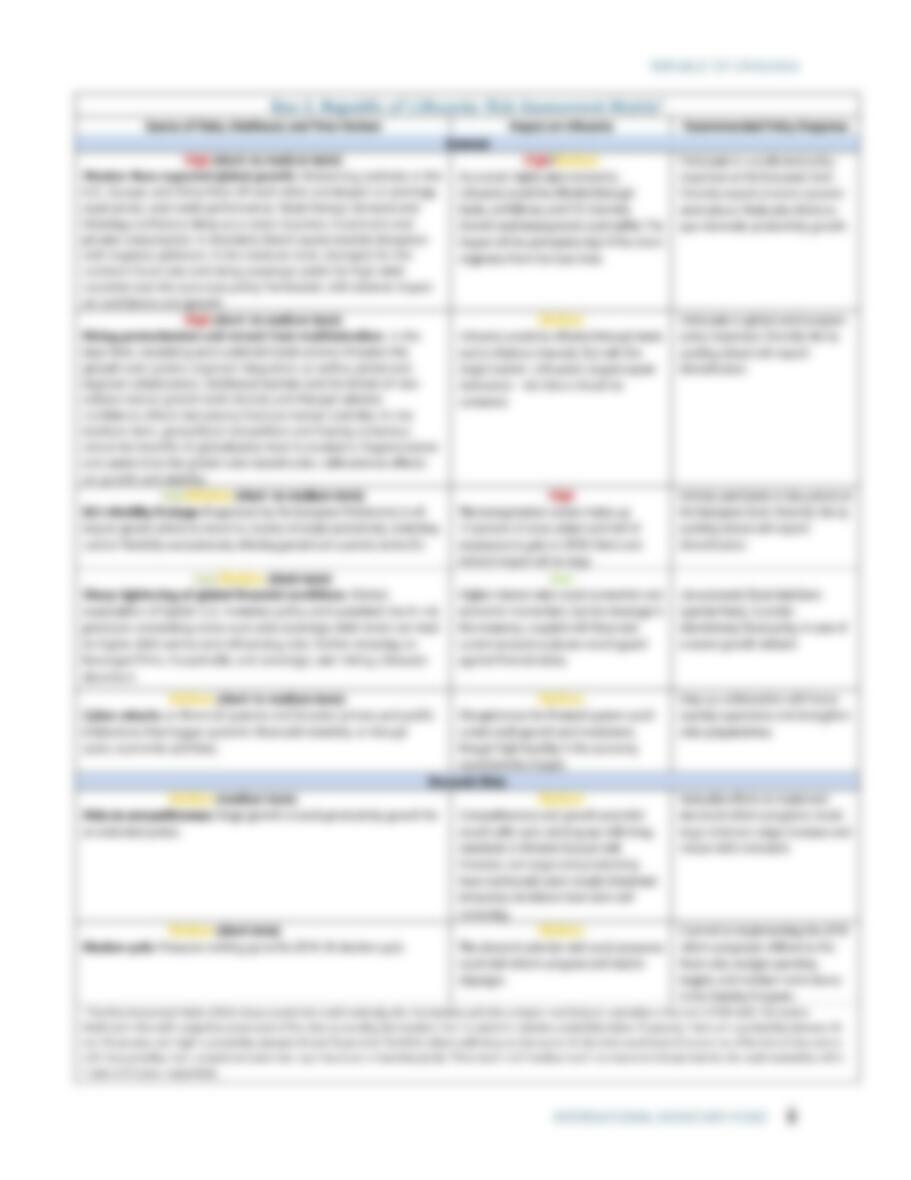
3. Risk Assessment Matrix _________________________________________________________________________ 9
4. Fiscal Transparency ____________________________________________________________________________ 13
5. Structural Reforms: Diagnostic, Recommendations and Actions _______________________________ 15
FIGURES
1. Macroeconomic Sector Developments ________________________________________________________ 21
2. Labor Market and Competitiveness Developments ____________________________________________ 22
3. Banking Sector Developments_________________________________________________________________ 23
4. Fiscal Developments ___________________________________________________________________________ 24
5. Adverse Demographic Trends _________________________________________________________________ 25
6. Stock and Flow Adjustment ___________________________________________________________________ 26

REPUBLIC OF LITHUANIA
INTERNATIONAL MONETARY FUND 3
TABLES
1. Selected Economic Indicators, 2015–24 _______________________________________________________ 27
2. General Government Operations, 2015–24 ____________________________________________________ 28
3. Balance of Payments, 2015–24 ________________________________________________________________ 29
4. Summary of Monetary Accounts, 2011–18 ____________________________________________________ 30
5. Financial Soundness Indicators, Banking System Data, 2012–18 _______________________________ 31
6. Public Sector Balance Sheet Overview, 2016 ___________________________________________________ 32
ANNEXES
I. Public Sector Debt and External Sustainability Analysis ________________________________________ 33
II. A Stock-Flow Analysis of the Boom, Bust, and Recovery _______________________________________ 36
III. Fintech in Lithuania ___________________________________________________________________________ 42

REPUBLIC OF LITHUANIA
4 INTERNATIONAL MONETARY FUND
CONTEXT: STRONG PERFORMANCE IN A MORE
UNCERTAIN EXTERNAL ENVIRONMENT
1. Lithuania has for the first time experienced a strong recovery without the emergence
of the types of imbalances experienced pre-crisis. With a positive output gap, a tight labor
market is putting pressure on wage growth. However, large competitiveness gains obtained during
the crisis have been largely preserved: the current account remains in surplus with export shares
increasing. Labor productivity and investment have recovered but remain below unsustainable
pre-crisis levels. Fiscal deficits are now surpluses with debt at moderate levels and declining.
Private-sector balance sheets have improved as have cross-sectoral exposures and contagion risks.
2. However, in a mature cyclical position and with external conditions deteriorating,
risks, mostly external, abound. Europe’s outlook has weakened, trade tensions continue, Brexit
conditions remain uncertain and geopolitical risks persist. Domestically, without continued
productivity gains, high wage growth, which is critical to increase living standards, will not be
sustainable as it could erode hard-gained competitive advantages. Finally, the electoral calendar up
to parliamentary elections next year is delaying the implementation of key reforms.
3. Meanwhile, the challenge of transitioning from a low-wage to a high-productivity
economy remains. Progress with key structural reforms has been weak. The ambitious reform
package approved last year correctly identifies the key areas where progress is needed. However,
without buy-in from municipalities, implementation in healthcare and education is failing to
materialize. In other areas, such as reducing the labor tax wedge and generating a broader and
more efficient revenue base, reforms are not ambitious enough. Only comprehensive reforms will
allow Lithuania to produce the competitive and well-paid workforce necessary to tackle, or even
reverse, negative demographic dynamics.
RECENT DEVELOPMENTS: STRONG CYCLICAL
PERFORMANCE WITHOUT PRE-CRISIS IMBALANCES
4. Economic performance in 2018 was positive, exceeding expectations. Strong real
growth in 2017 carried over into 2018, ending at 3.5 percent, with external demand more resilient
than expected. This trend continued into early 2019, with first quarter growth at 4 percent. Private
consumption growth was strong at 3.9 percent last year, a rebound from 2017, supported by strong
wage and better-than-expected employment growth. Gross fixed capital formation growth remained
high, with an increase in construction ameliorating the slowdown in machinery and equipment.
Utilization of EU funds was significantly higher than in 2017. After a surge in the trade balance in
2017 and despite the slowdown in global trade, exports’ contribution to growth remained strong.
The current account surplus in 2018 was the highest in four years.
5. The labor market remains tight with labor costs among the fastest growing in the EU,
but without inflationary pressures. The unemployment rate continued to decline, reaching
REPUBLIC OF LITHUANIA
INTERNATIONAL MONETARY FUND 5
6.1 percent in 2018, below staff’s estimate of the
NAIRU, while labor force participation kept
increasing, especially among the youth and
elderly. The decline in working age population
slowed with rising immigration, which
contributed to employment growth turning
positive. The strong wage growth since 2013
accelerated to 10 percent in 2018, with increases
in the public sector exceeding those in the
private sector for the first time since 2012. The
minimum wage continued to increase, albeit at a
slower pace and, at 43 percent of the average
wage, stayed just below the Tripartite Council’s targeted range of 45–50 percent. Strong wage
growth has been supported by faster productivity growth in the price-taking export sector. The less
productive nontradable sector has absorbed higher labor costs by partially passing them to
consumers and reducing profit margins. Therefore, solid domestic demand has not yet led to
increased goods inflation while service inflation was higher. This trend has largely reversed the
decline in wage share and increase in profit rates observed during the crisis that was instrumental
for the strong recovery.
6. The fiscal position reflected a positive macroeconomic environment and a prudent
budget. The general government has accumulated increasing surpluses for three consecutive years
and the overall balance exceeded original plans. The structural fiscal position remained broadly
neutral with the improvement in the overall balance reflecting better-than-expected economic
conditions. However, spending pressures started to manifest, particularly in social benefits and
wages at the expense of other discretionary items, which will leave a persistent impact on spending.
7. The financial system remains profitable, well capitalized and liquid with no signs of
emerging imbalances. Financial soundness indicators are strong while capital adequacy ratios
continue to exceed requirements. The system increasingly relies on customer deposits for funding,
which increased by about 11 percent in 2018, exceeding the growth of the loan portfolio (in line
with nominal GDP at about 7 percent). The composition of the loan portfolio has increasingly shifted
towards mortgages. However, at less than 50 percent of GDP, the loan portfolio is relatively small
and significantly below the pre-crisis peak of 64 percent. The favorable economic conditions have
contributed to further improving asset quality, with non-performing loans remaining below the EU
average. High profitability reflects banks’ efficiency, among the highest in the EU (Box 1).
Nonetheless, spillovers from real-estate related vulnerabilities in the Nordic parent banks remain a
potential risk.
1
These vulnerabilities ameliorated in 2018 as the Swedish authorities implemented
new mortgage-related macroprudential policies and increased the countercyclical capital buffer
(CCyB), and housing prices stabilized.
1
Two Swedish Banks account for about 60 percent of Lithuania’s banking system assets.
-10
-5
0
5
10
15
20
1995
1996
1997
1998
1999
2000
2001
2002
2003
2004
2005
2006
2007
2008
2009
2010
2011
2012
2013
2014
2015
2016
2017
2018
Real wage growth
Unemployment rate
NAIRU
Unemployment Rate and NAIRU
(In percent)
Sources: Statistics Lithuania and IMF staff calculations.
REPUBLIC OF LITHUANIA
6 INTERNATIONAL MONETARY FUND
Box 1. Bank Competition
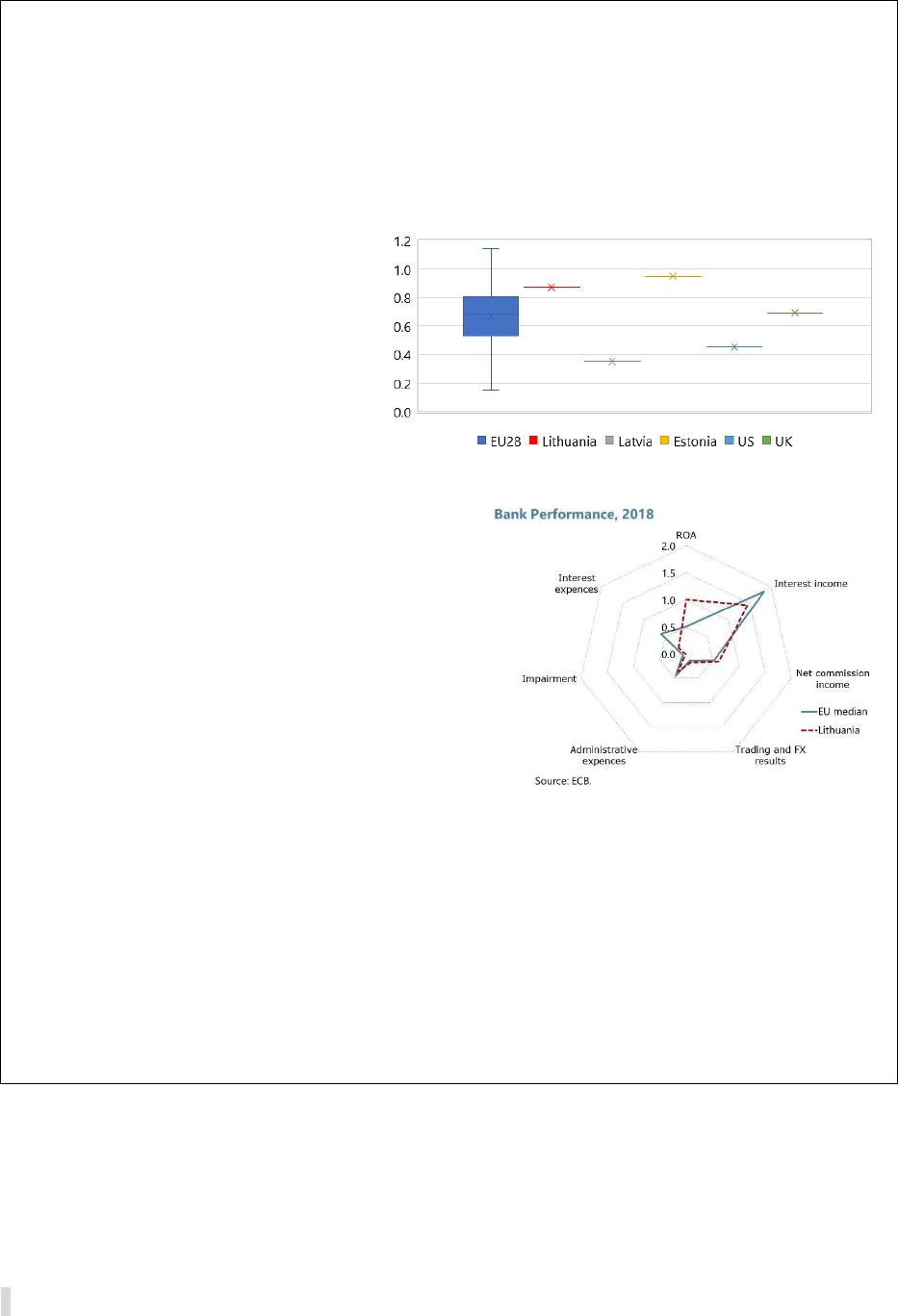
There is concern that the high concentration in the banking system may be hindering competition. At
end-2018, 7 banks and 9 foreign branches were operating, with the three largest banks accounting for
84 percent of system assets. This level of concentration is relatively high for Europe, albeit not for some
small economies similar to Lithuania.
Concentration has not resulted in poor competition. The net interest margin of Lithuanian banks is
broadly in line with the European average.
While the share of non-interest income is
relatively high, it is likely explained by the
large reliance on customer deposits as a
source of funding post-crisis relative to the
rest of Europe. Moreover, the traditional
H-Statistic1 is about 0.87, among the highest
in Europe, which suggests strong
competition. This test assesses the change
of output prices in response to change in
input prices, a direct attempt to capture
monopolistic behavior.
Profitability seems to reflect high
efficiency. Return on assets was slightly above
one percent and return on equity was around 12 percent
in 2018. These levels of profitability are among the
highest in Europe. However, Europe is not a good
benchmark in this area. The average return on equity was
around 13 percent before the crisis and fell to 3 percent
afterward—and is yet to recover. Such weak profitability
could erode buffers over time and undermine banks’
ability to support growth. Moreover, cost–to-income
ratios are among the most efficient in Europe,
suggesting that profits are driven by low operating costs.
However, recent signs point to decreasing
competition. The exit of a medium-size bank and the ongoing restructuring of the third-largest one—which
seeks to increase reliance on deposits rather than parent funding—might have eased competition in the
short-term, particularly on the lending side. The impact on the deposit side is being defused by ample
liquidity. The modest increase in interest margins for mortgages may reflect increased maturities while that
for non-financial corporate credit is hard to assess given higher volatility and other factors such as the switch
to capital markets by some strong corporates.
____________________
1 See Panzar, J. C., & Rosse, J. N. (1987). Testing for “monopoly” equilibrium. The Journal of Industrial Economics,
443–456. In the Panzar and Rosse test for competition, the H-statistic sums up the coefficients of input prices on
revenue.
Note: This is the measure associated with the Panzar and Rosse revenue test.
Source: World Bank Global Financial Development Database.
H-Statistics
(Elasticity
of revenues to input prices)
REPUBLIC OF LITHUANIA
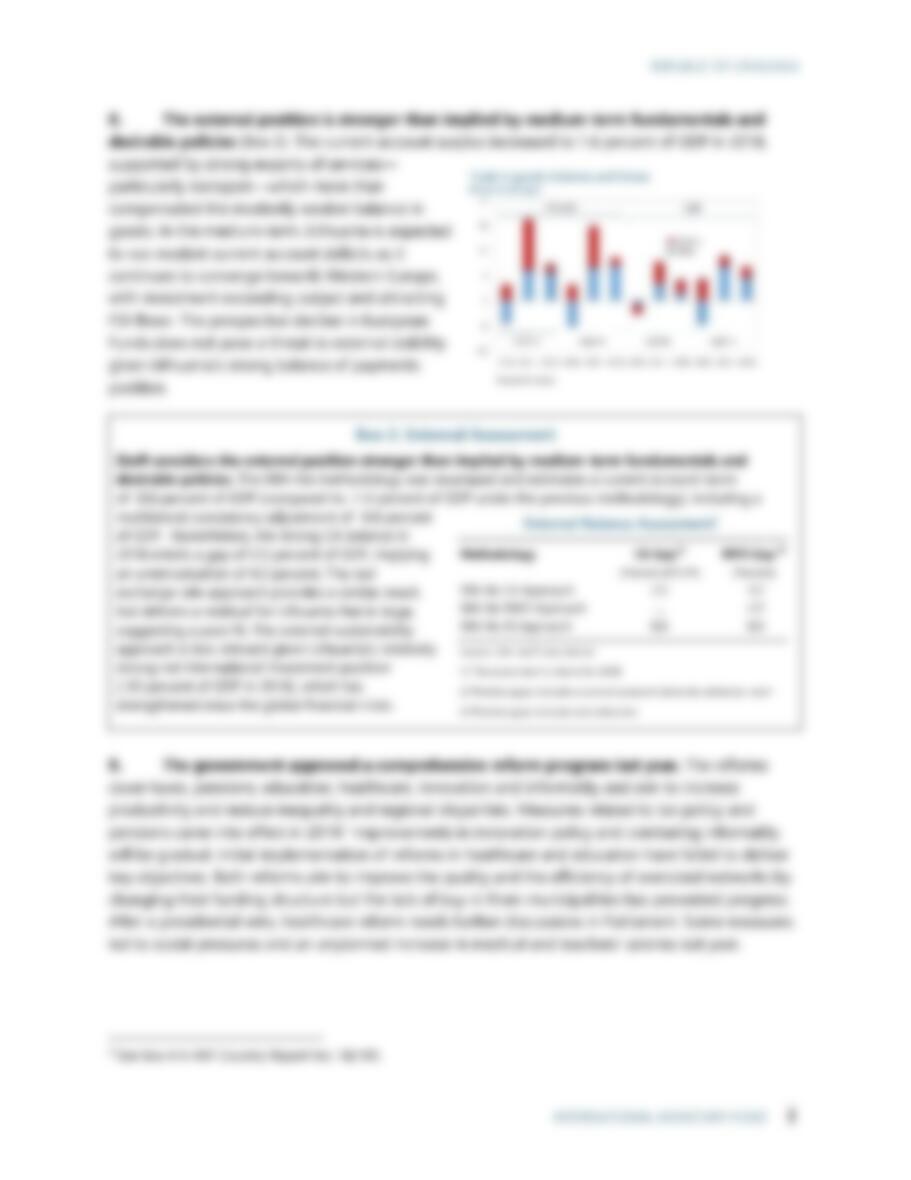
8. The external position is stronger than implied by medium-term fundamentals and
desirable policies (Box 2). The current account surplus increased to 1.6 percent of GDP in 2018,
supported by strong exports of services—
particularly transport—which more than
compensated the modestly weaker balance in
goods. In the medium-term, Lithuania is expected
to run modest current account deficits as it
continues to converge towards Western Europe,
with investment exceeding output and attracting
FDI flows. The prospective decline in European
Funds does not pose a threat to external stability
given Lithuania’s strong balance of payments
position.
Box 2. External Assessment
Staff considers the external position stronger than implied by medium-term fundamentals and
desirable policies. The EBA-lite methodology was revamped and estimates a current account norm
of -0.6 percent of GDP (compared to -1.4 percent of GDP under the previous methodology), including a
multilateral consistency adjustment of -0.6 percent
-10
-5
0
5
10
15
20
2016 2017 2018 2016 2017 2018 2016 2017 2018 2016 2017 2018
Volume
Value
Source: Eurostat.
Trade in goods: Volumes and Values
(Percent change)
Exports
ExportsImports Imports
Lithuania EU28